A Mudroom Reset for the First Wet Weeks of Autumn
A mudroom reset for wet autumn weather gives coats, shoes and bags a clear drying routine that fits the way your household actually arrives.
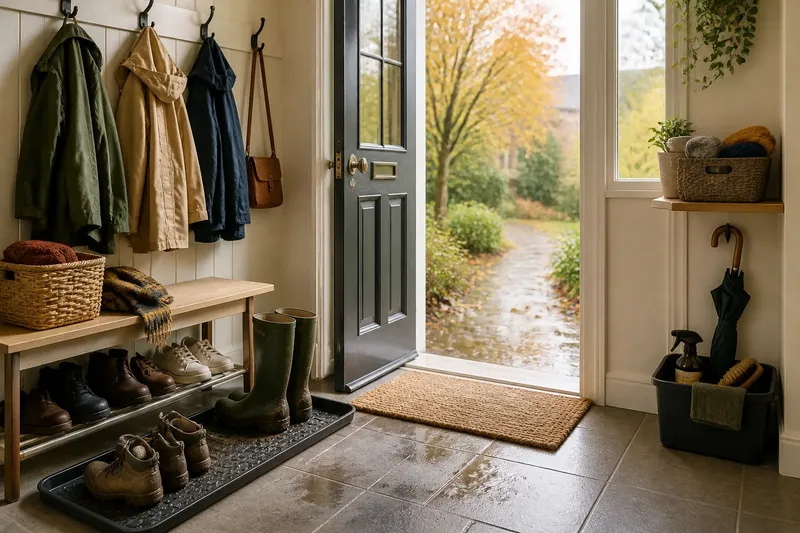
On a wet afternoon, one person comes in carrying shopping while another leaves a trail of shoes beside the door. A mudroom reset for the first wet weeks of autumn starts with that familiar arrival, not with a perfect-looking row of matching baskets. The aim is to give damp coats, footwear and everyday bags a workable place to land, dry and return to use.
Think of the reset as a short seasonal routine rather than a single tidy-up. You can make the main changes over a week, then adjust them as you notice where water collects, which hooks get used and what people leave on the floor. A narrow hall, porch or corner by the back door can all serve the same purpose if the arrangement suits the household’s usual route indoors.
Begin with arrivals
For a few ordinary days, notice what each person carries through the door and what happens next. Do coats go straight onto hooks, or are they draped over a chair? Are muddy shoes removed at the threshold, or carried further into the house? Does someone need a place to set down a work bag before taking off a raincoat?
This is observation, not a test of anyone’s tidiness. It tells you where the first useful landing place belongs. If there is room for a small bench, it may make shoe changes easier. If there is no spare floor area, a strong wall hook at a reachable height can prevent a bag being dropped on a wet mat.
Pay attention to the busiest arrival period. A household that comes home together may need several accessible hooks and a clear place for shoes. If people arrive at different times, a little separation between wet outerwear and dry belongings can make the entry easier to use without waking or disturbing others.
Clear the landing zone
Choose a short window to remove items that do not belong in the entry area. Put away summer footwear that is unlikely to be used, return stray household objects to their proper rooms and clear surfaces that have become informal storage. Keep the things that serve autumn arrivals within reach: current coats, bags, umbrellas and footwear used in wet conditions.
Then clean the surfaces that will handle moisture. Shake or wash the entry mat according to its care label, wipe the floor with a suitable method and let everything dry before putting items back. Check whether water can run off the mat onto a floor edge or collect beneath a shoe tray. A tray with a raised lip can contain drips, while a washable mat may be simpler where space is tight.
Do not try to make every object fit into the entry. A spare scarf used occasionally can live in a bedroom cupboard; the gloves needed on the daily school run may deserve a small, reachable container near the door. The useful distinction is frequency of use, not whether an object is technically an outdoor item.
Set up damp gear
Give wet things room to release moisture rather than pressing them against one another. Use hooks that leave air between coats, and keep the dampest outer layers away from paper, soft furnishings and bags that should stay dry. If a coat is dripping, hang it where water can fall onto a washable mat or into a suitable drip tray, not over a wooden surface or a pile of shoes.
Footwear needs a similar separation. A boot tray or washable mat can catch mud and water; a nearby shoe rack can hold pairs that are already dry. Avoid stacking wet shoes together, since trapped moisture can linger. If the entry has no ventilation, leave the door or nearby window open only when appropriate for the home, weather and household; otherwise, use the room’s ordinary ventilation without blocking vents or heaters.
Keep care products such as a shoe brush or cloth together in a closed container if children or pets could reach them. A simple cloth for wiping the tray is often enough for everyday upkeep. More specialised products should be used only as their labels direct.
Make the return routine easy
A seasonal setup works best when each arrival has a clear next action. Put down the bag, hang the coat, remove wet footwear, then leave the entry in a state the next person can use. The order may vary, but it helps if frequently used items have obvious homes and the route to them stays clear.
Say you have a narrow porch where two people arrive within a few minutes of each other. You could place a washable mat inside the door, hang the most-used coats on separate wall hooks, and set a boot tray beneath them with a small basket on a shelf for gloves. The expected observable result is that shoes and wet coats land in those designated places more often, while the walking space remains open; if the tray blocks the door or the basket fills with unrelated items, the arrangement needs a small adjustment.
Make the routine visible without turning it into a list of rules. A child-height hook can help a child hang up a coat independently. A small note inside a cupboard may remind adults where the shoe brush belongs. If someone uses a mobility aid or needs extra time to remove footwear, preserve the space and seating they need rather than prioritising a tidy display.
Follow the first week
Use the first wet week to make small corrections. At the end of each day, notice whether the mat is still doing its job, whether damp coats have enough space and whether anyone has to move another person’s belongings to get through. Change one thing at a time, such as shifting a hook or relocating a basket, so you can tell whether the adjustment helps.
- After a rainy arrival: check where water has collected and whether it stayed on the washable surface.
- After a busy evening: see whether shoes can be removed without blocking the doorway.
- After coats dry: return them to the everyday hooks or their usual wardrobe, so the entry does not become long-term storage.
- Before the next wet spell: shake out the mat, empty the tray and put the cloth or brush back where it can be found.
- At the end of the week: remove any object that has not helped with arrivals or care, and reconsider its place elsewhere.
If dampness persists, look beyond the arrangement: a saturated mat, a leak or poor ventilation may need separate attention. For changes involving building systems or a suspected water problem, seek appropriate professional advice rather than treating the entry layout as the cause.
Questions about wet entries?
How can a small entry handle wet coats?
Use a few spaced hooks for the coats worn most often, and move dry or rarely used outerwear to a wardrobe elsewhere. A wall-mounted arrangement can preserve floor space, while a washable mat or tray below catches drips.
Where should wet shoes go?
Place them on a washable mat or a tray that can contain water, with enough room for air to circulate. Keep dry shoes on a separate rack or shelf so they do not absorb moisture from wet pairs.
What if there is no mudroom?
Use the nearest practical area by an entrance: a section of hall, porch or utility room can work. Focus on a mat, a reachable hanging point and a defined place for footwear rather than trying to recreate a separate room.
How often should the setup be reset?
Do a brief check after especially wet days and a fuller tidy when the season’s routine changes. The right interval depends on how much mud and moisture enter the home, so let the condition of the mat and tray guide the timing.
Keep it seasonal
As autumn settles in, review the arrangement when the household’s needs change. A lighter coat may replace a bulky rain jacket; a child may outgrow a low hook; muddy footwear may become less common. Swap only what has become inconvenient, and keep the useful drying surfaces ready for the next spell of rain.
A good mudroom reset is not a promise that the floor will stay spotless. It is a practical way to catch water where it enters, let damp gear dry, and make the next arrival easier. Keep the parts that work, remove what gets in the way, and the entry can serve the household without demanding constant attention.