The Guest-Ready Room Is Not a Standard
A guest-ready room can still serve daily life. Choose an arrangement around visitors’ privacy, arrival time and belongings, with a simple changeover routine.
The folded duvet sits beside a laptop, and clean laundry waits in a basket by the wardrobe. A guest-ready room can still serve daily life; the useful question is whether a visitor can arrive, sleep and settle in without a scramble. Guest-ready room arrangements work best when they respond to the kind of stay the household actually hosts.
Consider the visitor’s experience as well as the room’s usual job. A late arrival may need a clear route to the bed and an easy-to-find light. Someone staying several nights will need a place for clothes and personal belongings. Those needs help determine which parts of the room should remain ready and which can be put away before a visit.
Arrival and privacy
Start with the likely pattern of visits: how much notice guests usually give, whether they arrive after the household has gone to bed, and whether they need privacy during the day. These details distinguish a room that can be prepared in advance from one that must be ready with little warning.
A dedicated sleeping room can suit frequent or short-notice visits because the bed and basic comforts stay in place. A room used for work or hobbies may suit occasional visits if its usual equipment can be set aside without a major clear-out. If a visitor needs quiet or a separate place to dress, a sleeping surface alone will not meet the whole need.
Guest-specific features
Look at the room from a visitor’s point of view. Is there a clear route from the door to the bed? Can a guest reach a lamp without crossing a dark room? Is there somewhere to put a bag, hang a coat or keep a phone within reach? These practical details matter more than whether the room appears unused.
- Check whether the route to the bed is clear; if a basket or chair blocks it, move that item, or choose another sleeping position if the route cannot be cleared.
- Check whether a guest can reach a bedside light; if the switch or lamp is awkward to reach, reposition the lamp, or add a reachable plug-in light if suitable.
- Check whether there is a surface for glasses, a book or a phone; if the bedside table is occupied, clear it, or provide a stable alternative.
- Check whether the wardrobe has an empty section or available hangers; if not, clear a small portion, or offer a separate hook or rail if the room has space.
- Check whether personal papers, cables or hobby materials are visible; if they are, put them in a drawer or lidded box, or move them to another secure place.
- Check whether clean bedding and a towel are easy to locate; if they are scattered, gather them on one labelled shelf, or place them together in a lidded box.
- Check whether the guest can use the room without disturbing work or sleep; if household activity would intrude, agree on quiet periods, or arrange another sleeping space.
For bedding or furniture that folds, opens or converts, follow the maker’s instructions. If a guest has access needs, ask what would help rather than assuming a standard arrangement will suit them.
Daily use and changeover
A room’s everyday purpose deserves a concrete place in the decision. If it is an office used each morning, decide where the work equipment goes before guests arrive. If it is a sewing room, identify which materials can stay in place and which must be put away. The aim is a manageable changeover, not the impression that the room has never been used.
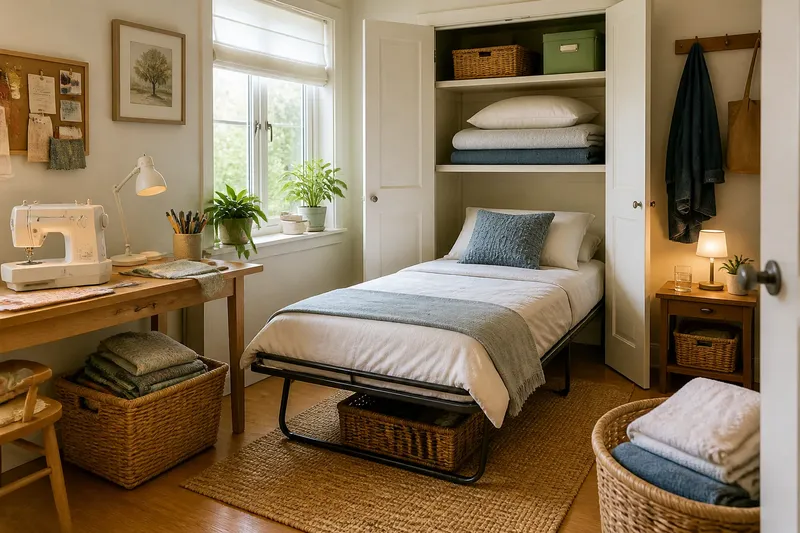
Say you use a small room for sewing and a relative asks to stay overnight. The stated starting point is a folding bed in the cupboard, a sewing machine on a table, and bedding stored in a separate cupboard. You bring the bedding together, open the bed, move the fabric basket beside the table, and leave the machine in place; then you check that the door-to-bed route and bedside surface are clear. The resulting arrangement keeps the sewing setup available while creating a sleeping place, but the guest will have less open floor space. If that trade-off would make the stay uncomfortable, choose another room or move more of the sewing equipment before the visit.
A short changeover routine can make the arrangement easier to repeat. Keep bedding and a clean towel together, put away private items, clear a surface for the guest, and check the route to the bed and bathroom. For a late arrival, leave the light easy to find and explain anything they may need to know about the room.
Choosing for each stay?
Does a short-notice visit change the choice?
It can: a bed that remains available may be more suitable when there is little time to prepare. If visits are planned well ahead, a room used for another purpose can work when its changeover is simple.
What if the guest needs daytime privacy?
Consider whether the room can be left quiet and accessible while the visitor rests or changes. If household work or shared use would make that difficult, agree on private periods or find a separate place to sleep.
How much storage should be left?
For a brief visit, a clear surface, a hook and room for a bag may be enough. For a longer stay, leave some wardrobe space or a few hangers, and ask the visitor if they need anything else.
What if the usual room is not suitable?
Do not force a sleeping arrangement into a room that cannot provide a reasonable route, privacy or comfort. Ask the guest what would help and consider another room or a different plan.
A repeatable welcome
Store guest essentials together rather than scattering them between cupboards. A labelled shelf or box can hold a pillowcase, towel and any spare light or charger the household chooses to provide. After a stay, return used items to the laundry and replenish the box so the next changeover begins from a known place.
Guest-ready room arrangements do not need to look identical from one household to another. Choose around the visitor’s privacy, arrival and belongings, then keep the preparation simple enough to repeat. A clear route, an easy-to-find light and a place for a bag can make a room feel considered even when its everyday purpose remains visible.